
UFCW 401 HONOURS BLACK HISTORY MONTH!
Black workers and Black communities are a vital part of Canadian history and our national experience, and Black History Month provides an occasion to recognize and celebrate their contributions and leadership.
The month also provides an opportunity to acknowledge, reflect on and participate in the ongoing struggle against racism. Anti-Black racism still lies at the root of systemic barriers faced by Black workers in the modern workplace, and the battle against these inequities has been a core part of the history of UFCW Local 401.
We will be using this page to share facts, conversations and information on events related to that history as we honour and commemorate the month. This page will also provide a portal to campaigns and initiatives coming from the Canadian labour movement, including UFCW Canada’s Black Voices Matter campaigns and the Canadian Labour Council’s campaign on environmental racism.
Workers’ rights and the cause of racial justice are inseparable, and as we honour Black History Month, we will continue to update this page in recognition of that fact.
BLACK HISTORY MONTH EVENTS

This year marks a meaningful milestone: 100 years of Black History Month celebrations globally and 30 years in Canada.
There are numerous events scheduled in Calgary, Edmonton, and across Alberta:
- Click here to see a schedule of events through the City of Calgary.
- The Calgary Public Library is an especially prominent venue, hosting a range of events that includes An Evening with Wakefield Brewster (Memorial Park Library – Main Floor – Salon, Thursday, Feb. 19, 6:30 – 7:30 p.m.).
- Studio Bell is hosting a Black History Month Celebration all day on February 7th.
- Avenue Magazine Calgary has collected a series of Black History Month Events to Check Out in Calgary.
- Click here to see a schedule of events through the City of Edmonton.
- Specific events and venues in Edmonton include:
- Black History Month 2026 – Official Opening Ceremony (Citadel Theatre)
- All Black Wear Gallery Affair – Valentine’s Edition (Art Gallery of Alberta)
- Black History Month Brunch 2026 (Alberta Avenue Community Centre)
- Celebrate Black Voices in Arts & Film (The Orange Hub)
- Black History Month Church Service Celebration (Trinity United Church)
- Caribbean Oil Workers & Alberta’s Economy: 1960s and Beyond (Royal Alberta Museum)
- 40th Annual Black History Month Gospel Concert (Jubilee Auditorium)
- Edmonton Public Library – Black History Month Events & Resources
- Red Deer Polytechnic hosts events throughout Black History Month.
- Ubuntu and the Red Deer Public Library are co-hosting an all-ages family event at the Downtown Branch of the RDPL on February 7th.
- A whole range of Black History Month events are happening in Downtown Lethbridge.
We hope you’ll take time this month to celebrate Black excellence, support community events, and engage in meaningful learning and connection.
BLACK VOICES MATTER

Education plays a critical role in building awareness and driving meaningful change. To help foster understanding and action, UFCW Canada is offering the webCampus course Black Voices Matter. This course is a powerful resource designed to help workers recognize, understand, and actively combat anti-Black racism in Canadian society and in the workplace.
Through key topics such as identifying systemic racism, understanding how anti-Black racism manifests at work, and learning about the legal framework that protects workers’ rights, participants gain valuable insight into the challenges faced by Black workers. The course also highlights practical strategies for creating inclusive and supportive workplaces, emphasizing the importance of allyship, advocacy, and solidarity.
By equipping participants with knowledge and tools to take action, Black Voices Matter empowers workers to help build environments where everyone feels seen, heard, and valued.
Learn more and enrol in the course today.
CALLING FOR AN END TO ENVIRONMENTAL RACISM
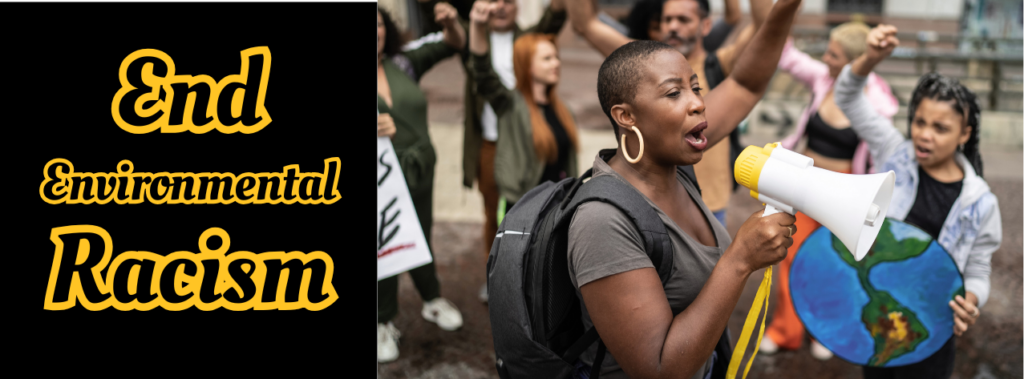
Canada’s unions are marking Black History Month by calling for an end to environmental racism.
A 2020 report by the UN Special Rapporteur on Toxics and Human Rights noted prevalent discrimination in Canada’s policies and laws related to hazardous substances and wastes, stating: “there exists a pattern in Canada where marginalized groups, and Indigenous peoples in particular, find themselves on the wrong side of a toxic divide, subject to conditions that would not be acceptable elsewhere in Canada.”
This pattern is called environmental racism, and it has a long history in Canada.
Residents of African Nova Scotian communities like Africville, Shelburne, and Lincolnville have been subjected to it – exposed to sewage systems, landfills, toxic waste, and other pollutants placed in their communities.
This is not just a part of history. Environmental racism springs from deep and ongoing structural inequities that have left communities with few resources and protections over many generations. Today, Black workers and communities continue to live with the consequences of economic and social policy decisions rooted in systemic racism that have resulted in their greater exposure to environmental hazards.
Policy decisions often disregard the long-term environmental, social, and economic costs shouldered by the communities most impacted by these decisions. For Black, Indigenous, racialized, and marginalized communities, the outcome has been exposure to higher rates of pollution and contamination, causing great harm and reducing life expectancy. These communities are paying a high price for unjust policies impacting access to employment, income, housing, and health care.
“Climate change only deepens the injustices of environmental racism, and while all workers are increasingly dealing with its effects, not all of us are feeling it equally. Black workers are also contending with longstanding structural inequities, including discrimination and anti-Black racism and the income inequality that stems from these. This causes Black workers to be more vulnerable to the climate crisis on all fronts – both on the job and at home,” said Larry Rousseau, CLC Executive Vice-President.
With the development of its first-ever National Strategy on Environmental Racism and Environmental Justice, the federal government has an historic opportunity to make lasting change by ensuring meaningful consultation with Black workers and communities, as well as with Indigenous and racialized workers and communities; allocating sufficient funding for community-led solutions and investing to protect and create good, sustainable union jobs by aligning solutions with strong occupational health and safety protections; responding to urgent needs while also addressing systemic environmental racism; and collecting and using disaggregated race-based data to develop good policy that effectively addresses risks and structural inequalities.
Black workers’ survival and well-being depend on equitable access to good, safe jobs, as well as government action to address the root causes of income inequality and the climate crisis. Join our calls and send a letter today to the Minister of Environment, Climate Change and Nature and urge government to take swift action to develop and table the National Strategy and combat environmental racism faced by Black workers and communities.