
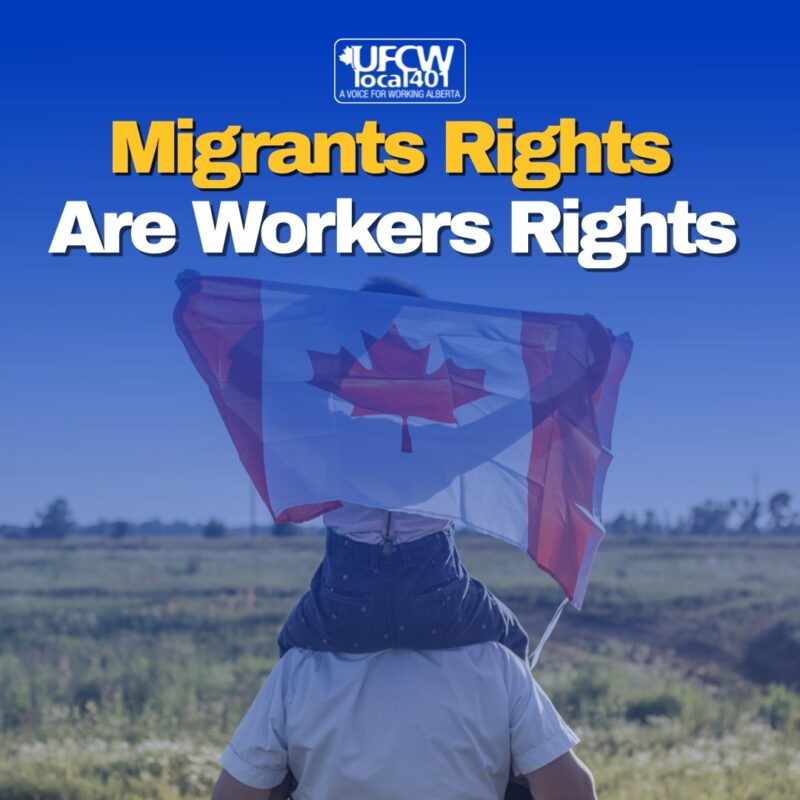
UFCW LOCAL 401 ON REFERENDUM RESULTS IMPACTING MIGRANT WORKERS
CALGARY, AB – Following the outcome of Alberta’s recent provincial referendum, the United Food and Commercial Workers union (UFCW) Local 401 has deep concerns surrounding the impact the provincial referendum will have on thousands of workers across major sectors in Alberta.
While the union expressed relief that voters chose to remain part of Canada, leadership noted that the ballot’s complex immigration-focused questions lacked critical context and information that now leaves migrant workers vulnerable in the midst of an affordability crisis impacting all Albertans.
“The outcome of this referendum and the confusing nature of the questions posed have left many working people feeling targeted and unsettled,” said Thomas Hesse, President of UFCW Local 401. “Alberta has always been built on the contributions of people from all walks of life. We will not allow wedges to be driven between neighbours, coworkers, and families. Turning a cold shoulder to our immigrant population and creating the potential to freeze them out of benefits is very troubling; there’s a reason that the word ‘ICE’ has become a symbol of oppression in the US. Our union stands firmly together, and we will fiercely protect the dignity and rights of every single worker who calls this province home.”
Local 401 pointed out that many of the people packing meat, stocking grocery shelves, and keeping local supply chains running are proud immigrants and temporary foreign workers working alongside Canadian-born colleagues. For temporary foreign workers who often navigate immense structural challenges, the referendum’s aftermath has heightened anxieties regarding their future and livelihoods.
Faduma Ahmed, UFCW Local 401 Union Representative specializing in temporary foreign workers, emphasized that these workers are foundational to keeping the economy moving and must not be used as political leverage: “Temporary foreign workers and newcomers are foundational to our communities and our economy, yet they are too often caught in the crosshairs of political posturing,” said Faduma Ahmed. “They come here seeking a better life, working gruelling hours, and driving our economic growth. We must ensure all workers receive the same dignity, respect, and fairness regardless of where they come from. UFCW Local 401 will continue to stand shoulder-to-shoulder with temporary foreign workers to ensure they are protected, respected, and valued.”
In manufacturing hubs like Brooks, where thousands of union members power JBS Canada—one of the country’s largest beef processing facilities, slaughtering roughly 4,200 to 4,500 cattle a day to feed families across the nation—the stakes are deeply personal. Adriana Salguero, UFCW Local 401 Union Representative in Brooks representing JBS workers, highlighted the gruelling physical reality on the shop floor: “Meat packing is far from easy work; it requires hoisting heavy carcasses onto your shoulders shift after shift, and it’s not a job with lines of people waiting to do it,” said Adriana Salguero. “In Brooks, we see every single day what true community looks like, with people from all over the world working side by side to feed families across Canada. Our members at JBS are just trying to make ends meet, pay their taxes, and build a secure future. They deserve the same access to the services that their tax dollars pay for like all workers do in this province.”
The union is clear that Local 401 will fight to ensure migrant workers receive the same services they do today. It may be necessary for employers to accept union proposals that make them pay to fund the difference and make up for legislative amendments resulting from this referendum. UFCW Local 401 is fully prepared to position itself to strike if employers are not prepared to provide these workers with the necessary benefits.
“Our job is to ensure our members are protected regardless of immigration status,” Hesse concluded. “If employers are concerned about the increased cost we demand they pay to make up for legislative changes directed at migrant workers, we encourage them to reach out to their local MLA.”
Posted on: October 22,2026